
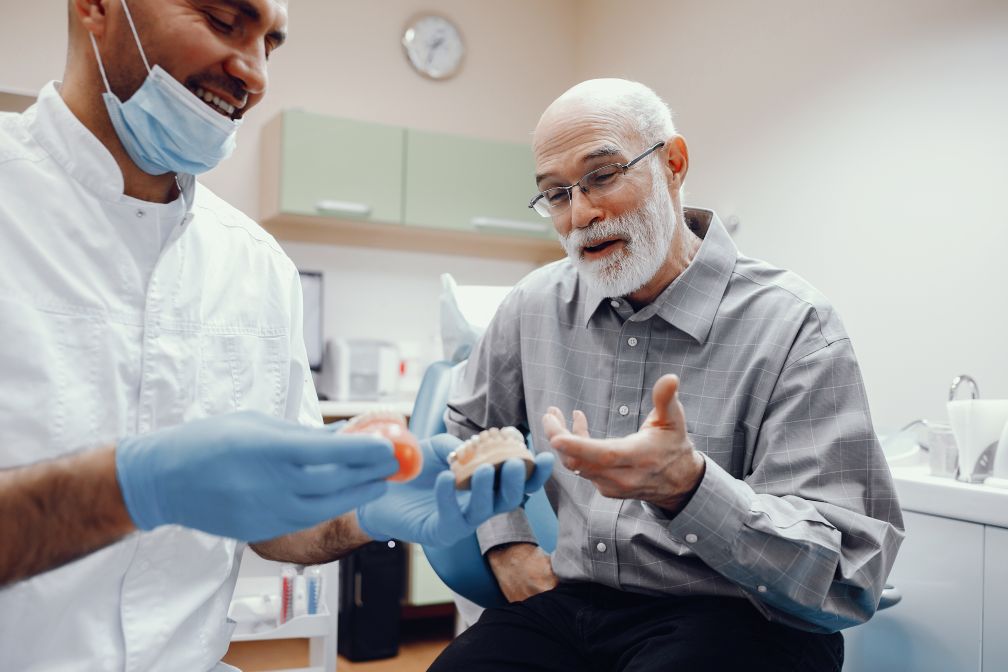
Your dentures are durable, realistic-looking prosthetics that can replace an entire arch of missing teeth. They were designed to make everyday things like speaking clearly, smiling confidently, and eating a healthy diet easier. But if your restorations don’t fit right, they can have the opposite effect, making your mouth hurt and attempting those important activities difficult and embarrassing. Here are five problems that your poorly-fitting dentures could be causing, and what you should do if they happen to you!
Eating Issues
Dentures can help you enjoy a wide range of nutritious, delicious foods that you may not have been able to chew without teeth. However, to stay in place securely enough to break down your diet, they need to fit properly. If yours have begun to change shape or no longer sit comfortably where they belong, it can be difficult to chew your food thoroughly, increasing your risk of heartburn. The inability to eat healthy foods like lean proteins, fresh fruits and vegetables, and even protein-packed nuts and seeds can also seriously restrict your diet and may even lead to malnourishment.
Mouth Sores
When your dentures stop fitting correctly, it can apply pressure unevenly throughout your smile, resulting in painful denture sores on the arches and the roof of your mouth. In addition to being incredibly uncomfortable while eating, these lesions also increase your risk of oral infections like gum disease, which can ultimately lead to even more permanent tooth loss and potential jawbone deterioration.
Talking Troubles
Once you’ve mastered talking with your new dentures, they can help restore your ability to communicate clearly. Unfortunately, however, if they change shape or become damaged, they can make it harder to speak properly, which can be a serious problem, especially for seniors.
Dental Damage
If you’re fortunate enough to still have remaining natural teeth, damaged dentures can put them in peril, too by rubbing them, increasing tooth sensitivity as well as their risk of becoming accidentally chipped or cracked. It could even harm your dental implants or other restorations if you have those, too!
Periodontal Problems
When your dentures don’t fit right, they can rub against your gums and soft tissues, causing inflammation, pressure, and sores that may bleed and could even develop painful oral infections if not treated promptly.
How to Handle Damaged Dentures
If your dentures don’t provide the same secure, painless fit they did when you first got them, your dentist can help. In some cases, you may only need a relining procedure which can help reinforce your current prosthetics, so they stay in place on your arches comfortably. However, it’s possible that these changes simply mean it’s time to upgrade your restorations, especially if it’s been over five years since you began using them.
Remember, your durable, lifelike dentures were designed to restore your gorgeous grin for five to seven years, but if they’ve stopped feeling and working like they should, it’s time to visit your dentist for help, so she or he can help bring back your healthy, pain free smile!
About Our Practice
At Baldwin Family Dental, we are pleased to offer a variety of tooth replacement options including durable, lifelike dentures. Whether your current restorations aren’t fitting quite right, or you’d like to explore your options for restoring your smile for the first time, contact us today for a consultation by visiting our website or calling 850-215-0128.