
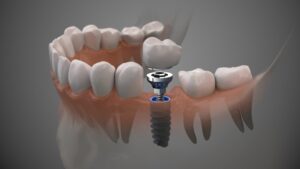
Dental implants are one of the most modern, cutting-edge answers to tooth loss, boasting a variety of unique benefits as well as offering patients replacement teeth that don’t just look natural, but also feel lifelike. However, there’s one detail that patients are right to prioritize, and that’s the cost of the procedure. Read on to learn five cost-affecting factors that could play a role in the final price tag of your dental implant treatment.
1. Diagnostic Scans
A critical part of the entire treatment process, as well as one of the first expenses that will pop up, is diagnostic scans. This will likely include X-rays as well as a cone beam CT scan of your entire facial structure, which is critical for detailed treatment planning. Taking the scan is fast, comfortable, and easy—all that’s required of you is to rest your chin on a pedestal while the scanner rotates around your head. It will take hundreds of images that will then be combined to create a 3D, detailed anatomical model of your face, including allowing your dentist to see the location of your facial nerves and sinuses.
2. Need for Preliminary Treatments
In some cases, particularly those where patients have been living with missing teeth for years, preliminary treatments may be required. These are separate procedures that will help prepare you for successful implantation, including bone grafting, sinus lifts, and ridge augmentation. While some of these may require a separate trip to a specialist, others may be completed by your implant dentist, but they will still incur a separate cost.
3. Number of Teeth Needing to Be Replaced
The number of teeth you’re needing to replace will have one of the largest impacts on the overall cost of your dental implant treatment. For example, replacing one tooth will only require the surgical placement of a single dental implants and free-standing crown, while restoring an entire arch can require the placement of anywhere from four to eight dental implants. This will affect the length of your surgery, the number of materials and resources used, and how long you’ll require sedation.
4. Dental Training & Expertise
Visiting a dentist with specialized training in the placement and restoration of dental implants can actually help make the overall cost of treatment more clear. This is because you won’t have to be referred to other offices for different parts of the procedure, leaving you in the dark about their fees. A dentist that can complete the entire implant procedure under one roof will be able to provide you with a detailed cost estimate for the whole process, making sure you’re well-informed of any related costs.
5. Dental Insurance Coverage
Finally, whether or not your dental insurance plan covers the cost of dental implants will also have a large impact on the overall cost. Your dental team will submit a pre-authorization/benefits check to your dental insurance company before your procedure so you know how much you’ll be expected to pay out-of-pocket before you move forward with surgery. In some cases, dental insurance will pay for a portion of the cost of treatment, like preparatory services or your prosthetic.
About the Practice
At Baldwin Family Dental, our team is comprised of Dr. Waheed and Dr. Panousis, who are both highly experienced dentists able to complete the entire dental implant procedure under one roof. With collective years of experience and a commitment to prioritizing comfort, patients are able to restore their smiles efficiently and with confidence. To learn whether you’re a good candidate for dental implants and how much your procedure will cost, visit Baldwin Family Dental’s website or call 850-215-0128.