
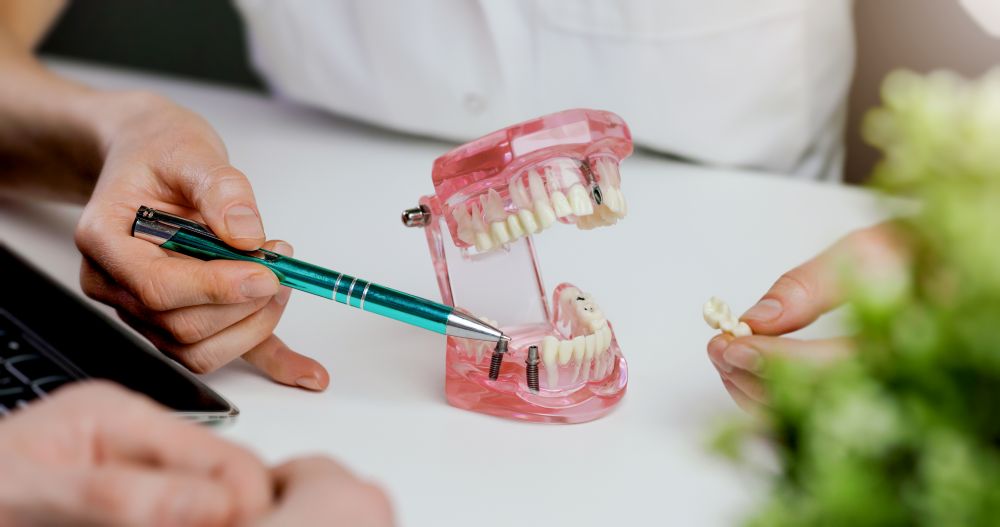
When it comes to understanding why dental implants are simply the best way to replace missing teeth there’s no confusion. But sometimes, the jargon your dentist may use during the treatment process may leave you scratching your head. Abutment? Osseointegration? What do these terms mean? Thankfully, there’s no need to download the latest language translation app. Here are the definitions of some key dental implant terms you may hear at your next dental appointment, and why they matter to your smile!
Abutment
The abutment of your dental implant is the piece that connects the implant itself to crown and holds it securely in place.
Osseointegration
This is the process where the dental implant fuses to the jawbone and improves the strength between the jaw and the prosthetic. The name comes from the Greek and Latin words that mean “bone” and “to make whole.”
Titanium
The majority of today’s dental implants are made from a metal known as titanium. It has many benefits, including a low instance of allergic risk, as well as being both lightweight and durable. It’s also easily able to ossify with the bone, making it more secure than other metals.
Zirconia
For patients who are allergic to titanium, zirconia can be an excellent alternative. Because zirconia implants don’t have prosthetic connections they have a lower risk of bacterial growth, which could translate to better gum health. Also, because it’s white, it looks more like a natural tooth.
All-on-4
All-on-4 dental implants use just four implant posts to replace an entire arch of teeth. This procedure can be done with a provisional denture in just one day, with the permanent prosthetic to be placed after your healing process!
Crown
The crown of your dental implant is the tooth portion that is visible above the gumline. A crown replaces a single tooth in an arch, whereas a denture or bridge can replace all or many.
Eposteal Implant
These implants receive their support by resting directly on your jawbone. Though they are not used often anymore, if there is a high risk of bone resorption, your dentist may opt to employ this method.
Endosteal Implant
Endosteal are the most commonly used implants. They are attached to the jawbone surgically via a series of small screws, plates, blades or cylinders. Each one can hold at least one crown.
Subperiosteal Implant
This implant sits on top of your jaw with the posts protruding through your gum to hold your prosthetics in place. If you have minimal bone height or can’t wear conventional dentures, your dentist may choose this method to secure your implant.
Remember, there are a lot of terms used during the dental implant process, but you can rest assured knowing that your dentist understands what they mean, as well as how they can improve your smile. If you ever have any questions about the definition of a term, don’t hesitate to ask your dental team for clarification. Understanding your treatment will hopefully help solidify your choice for restoring your smile with these life-changing prosthetics!
About Our Practice
At Baldwin Family Dental, Dr. Waheed, Dr. Panousis, and Dr. Pace put your comfort first. Whether we’re performing a routine exam and cleaning, a root canal, or restoring your smile with dental implants, we want to make sure you feel safe, comfortable and cared for, and that includes explaining any complicated jargon related to your procedure. If you’d like to learn more about how dental implants can help you, please visit our website to schedule a consultation, or call our team directly at 850-215-0128.